Upholstery is the trickiest textile in the house to clean well. Too much water and the padding stays damp for days, wicks stains back up as it dries, and risks the frame; too little and you're just wiping the surface. The whole job is about control — matching moisture and chemistry to the specific fabric in front of us.
We clean sofas, sectionals, accent chairs, dining seats, ottomans and headboards. Before anything gets wet we identify the fabric and test in an inconspicuous spot, then work in the right solution, agitate by hand where the material calls for it, and extract the loosened soil and moisture back out.
The goal isn't a fragrance layered on top. It's a cushion that's genuinely cleaner to the core, an odour that's actually gone, and a piece that's dry and usable again in hours, not days.
The method
Controlled cleaning, fabric by fabric
We start by reading the piece: fibre type, construction, and the manufacturer's cleaning code where there is one. That decides everything downstream — solution strength, how much moisture is safe, and whether we agitate with a soft hand-tool or barely at all.
A low-residue pre-treatment breaks down the body oils and grime that build where people actually sit and rest their arms. We extract with warm, controlled moisture so the padding never gets saturated, then groom the fabric and check the dry-down. Nothing about a couch should feel stiff or smell 'perfumed' when we leave.
Reading the fabric code
Most upholstery carries a cleaning code on the tag, and it changes how we treat it. 'W' means water-based cleaning is safe, 'S' means solvent-only (water can ring or shrink it), 'WS' gives us both options, and 'X' means vacuum-only — no wet cleaning at all.
We check for that code before we start and test a hidden area for colourfastness regardless. If a piece is 'X' or unlabelled and risky, we'll tell you straight rather than gamble with your sofa.
Odour, not fragrance
Fabric holds smell because it holds the thing causing it — sweat, milk, pet dander, that one spill nobody owned up to. Spraying scent over the top buys a day. We extract the source so the odour doesn't come back once the cover-up fades.
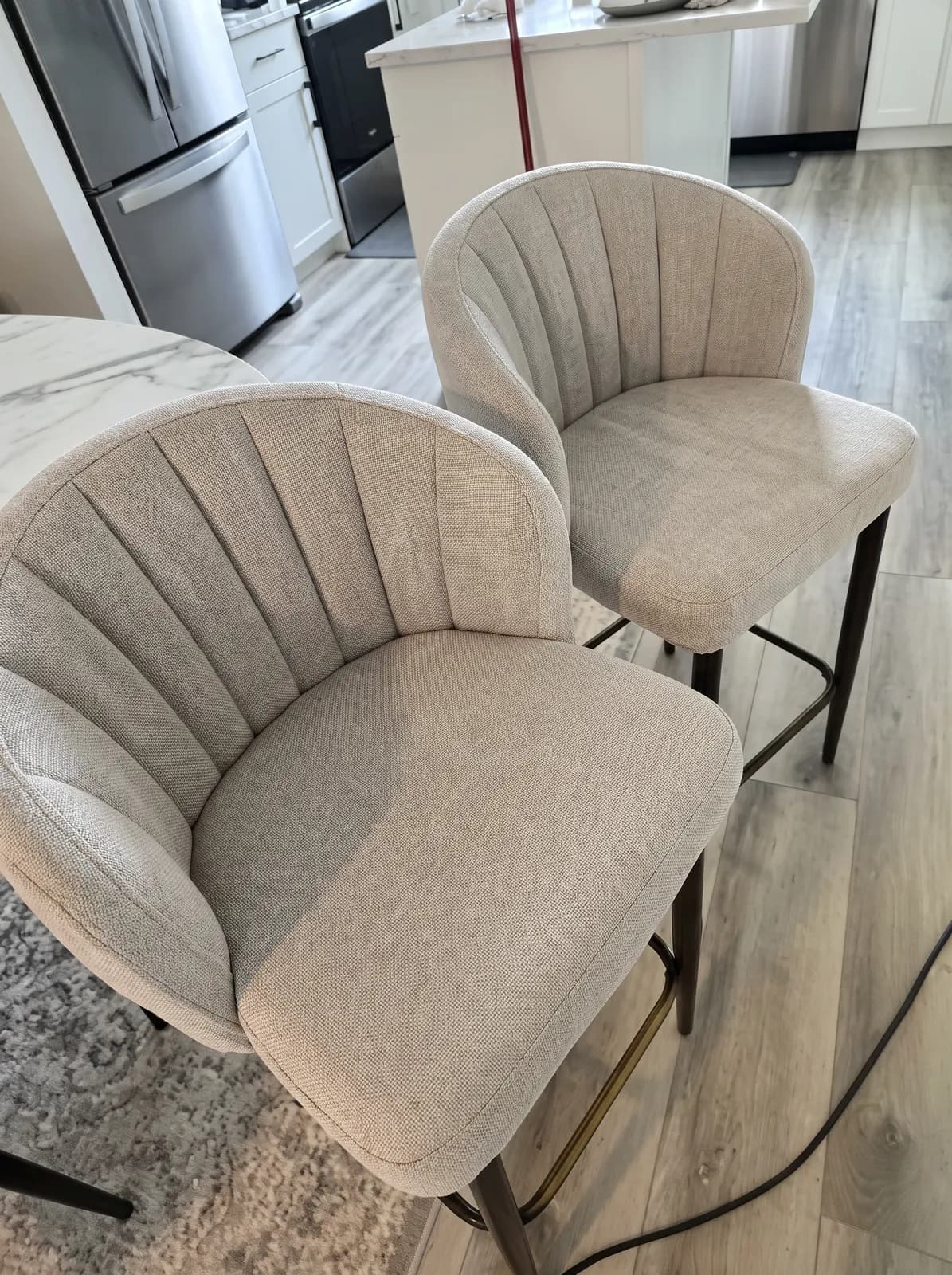
Light and white fabrics
Pale linens and whites show every arm-grease shadow and are the most satisfying to bring back — but they're also where over-wetting and browning show up worst. Controlled moisture and proper extraction are the whole game here, which is exactly how we work.